
When winter snowpacks atop the Sierra Nevada begin to warm under the late spring California sun, a spectacular transformation takes place across Placer County. Frozen moisture locked away in high-altitude peaks melts into millions of gallons of crystal-clear water, rushing down granite canyons and carving through the foothills. For thrill-seekers and whitewater enthusiasts, this annual seasonal cycle signals the beginning of one of the most exhilarating adventures in Northern California: chasing the legendary snowmelt down the North Fork American River whitewater rafting corridors.
While the nearby Middle Fork and South Fork of the American River offer fantastic, family-friendly drops and steady flows, the North Fork is a different beast entirely. Untamed, free-flowing, and dramatically steep, it delivers a wild, adrenaline-fueled ride that rewards experienced paddlers with untouched wilderness and unforgettable aquatic challenges.
If you are planning to test your mettle against the North Fork’s notorious spring flows, here is everything you need to know about conquering its legendary rapids.
The Untamed Nature of the North Fork
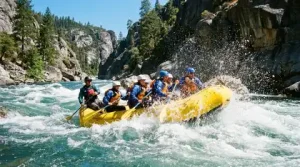
Unlike many rivers in California that are regulated by upstream dams and reservoirs, the North Fork of the American River flows completely free from its headwaters down to Lake Clementine. This lack of artificial flow control means the river’s character is entirely dependent on nature. Its volume, speed, and hazard levels fluctuate directly with the melting Sierra snowpack and spring rainstorms.
Because of this unbridled nature, the North Fork’s rafting season is notoriously fleeting. Typically opening up in late spring—around April, May, and June—the window of opportunity closes rapidly as summer temperatures dry up the snowpack. To monitor safety, water flow levels, and seasonal accessibility, professional outfitters and local authorities rely on real-time data provided by resources like the USGS Real-Time Water Data portal, ensuring trips are booked only when river conditions match safe commercial thresholds.
Inside the Canyons: The Legendary Rapids
Running the North Fork means navigating a relentless series of technical, continuous Class IV rapids. The river drops at a steep gradient through deep, rugged slate and granite canyons near Foresthill and Auburn, leaving very little flat water for recovery between drops.
Some of the legendary features that define a North Fork expedition include:
- Chamberlain Falls and Slaughter’s Sluice: Early technical warm-ups and powerful drops that require precise steering, quick communication, and absolute synchronization among paddlers to avoid sharp submerged boulders.
- The Staircase: A rapid sequence of plunging ledges that test a crew’s ability to maintain momentum while dropping through churning hydraulics.
- Bogus Thunder: One of the river’s most celebrated and intimidating drops. Here, the entire river accelerates into a narrow, twisting chute surrounded by sheer rock walls, generating massive waves and heart-pounding drops that demand flawless execution.
Navigating these waters requires more than just paddling enthusiasm; it demands deep respect for river dynamics. For a comprehensive overview of safety protocols, swift-water rescue techniques, and river conservation guidelines, outdoor enthusiasts frequently reference safety standards outlined by the American Whitewater organization.
Preparing for Your High-Adrenaline Expedition
Because of its demanding technical nature and physical intensity, the North Fork is generally recommended for adventurous participants with prior whitewater experience or exceptional physical stamina. Commercial trips are led by elite, highly certified river guides who know every rock, eddy, and hydraulic shift in the canyon.
Before stepping into a raft, preparation is key:
- Gear Up Properly: Outfitters provide professional-grade life jackets (PFDs), helmets, and neoprene booties or wetsuits depending on how cold the snowmelt is running. Dressing in synthetic, moisture-wicking layers is essential.
- Listen to Your Guide: When a guide calls out a command like “all forward” or “get down” in the middle of a roaring rapid, split-second obedience keeps the raft stable and prevents flips.
- Embrace the Wilderness: Between the white-knuckle drops, take time to look up. The canyon walls tower hundreds of feet overhead, draped in dense pine forests, wildflowers, and wildlife that remain entirely hidden from the paved roads above.
The Historic and Ecological Backdrop of the Canyons
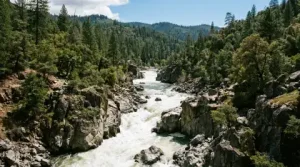 Beyond the whitewater thrills, a journey down the North Fork American River places adventurers directly inside a living museum of California history. The steep, rugged topography of Placer County was the beating heart of the California Gold Rush. As you navigate the roaring current, keep an eye out along the slate banks for remnants of mid-nineteenth-century mining flumes, hand-stacked rock walls, and historic prospector trails that have weathered over a century of seasonal floods.
The canyon ecosystem is equally striking. Springtime brings an explosion of native wildflowers—including California poppies, lupines, and redbud—that splash brilliant colors across the steep, chaparral-covered slopes. Overhead, soaring bald eagles, turkey vultures, and hawks ride the thermal updrafts created by the deep river gorge, while the cold, pristine water below teems with native fish species.
This delicate balance of wild recreation and protected natural heritage makes responsible river stewardship paramount. Local conservation groups, river outfitters, and public land agencies work year-round to preserve the pristine condition of the North Fork. Visitors are strongly encouraged to practice “Leave No Trace” principles, packing out all waste and respecting local wildlife habitats to ensure this unique corridor remains pristine for generations to come.
Planning Your Spring Trip: What to Know Before You Go
Because the North Fork season is entirely dictated by Mother Nature, timing is everything. The prime window usually spans from April through early June, peaking when the winter snowpack undergoes its most aggressive melt. If a winter brings heavy snowfall to the Sierra, the season may extend longer; conversely, low-snow years can shrink the runnable window to just a few short weeks.
When booking your expedition with a licensed commercial outfitter, inquire about minimum age requirements—which typically hover around 14 to 15 years old due to the physical rigor and Class IV+ intensity—and check whether pre-trip orientation or swimming proficiency tests are required. Many regional outfitters also offer multi-day combination packages, pairing the high-octane rush of the North Fork with the slightly more forgiving, wave-train heavy rapids of the neighboring Middle or South Forks for the ultimate California whitewater vacation.
If you are looking to push your boundaries, experience raw Sierra scenery untouched by modern development, and ride the peak of California’s seasonal snowmelt, few adventures match the sheer, pulse-pounding majesty of the North Fork American River.