
Stop 1: Old Town Auburn – Walking Through 1850s Heritage
Begin your journey in Old Town Auburn, the county seat and historic urban center of Placer County. Unlike many modern cities, Auburn’s historic district has meticulously preserved its mid-19th-century gold camp layout, complete with red-brick commercial structures, rusted iron window shutters (designed to protect against early town fires), and raised wooden boardwalks.
A walking tour of Old Town Auburn reveals several key historic landmarks:
- The Historic Placer County Courthouse: Completed in 1898, this classic Beaux-Arts style dome building dominates the town skyline and houses local historical archives.
- The Old Firehouse (Auburn Hook & Ladder): Constructed in 1893, this iconic red and white wooden structure with its prominent clocktower remains one of the most photographed buildings in the California foothills.
- Placer County Museum: Located inside the historic courthouse, offering interactive displays detailing Native Nisenan culture, early mining artifacts, and authentic gold nuggets.
For detailed historical exhibits and walking maps, explore resources provided by the Placer County Museums Department.
Crossing the Foresthill Divide: Soaring Over the Canyon
Leaving Old Town Auburn via Foresthill Road, your route climbs rapidly east toward the high ridge separating the North and Middle Forks of the American River, known geographically as the Foresthill Divide.
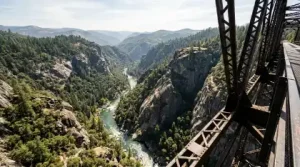
Shortly after leaving town, drivers cross the iconic Foresthill Bridge. Standing 730 feet above the riverbed, it is the highest bridge in California and the third-highest in the United States. Pulling into the designated pedestrian overlook parking area provides breathtaking panoramic views of the river canyon below, where 1850s prospectors once swarmed the gravel bars with gold pans and wooden rockers.
To learn more about the surrounding river recreation areas and hiking trails along the canyon rim, review information managed by Auburn State Recreation Area.
Stop 2: Foresthill – Timber, Hydraulic Mining, and High Ridge Life
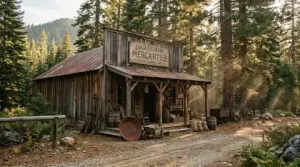
Continuing 17 miles east along the ridge crest brings you to the historic town of Foresthill. Founded in 1850 as a trading post for miners working nearby placer deposits, Foresthill quickly evolved into one of the richest mining camps in the region following the discovery of deep underground gold-bearing gravel channels.
By the 1860s and 1870s, hydraulic mining—using high-pressure water cannons called “monitors” to blast away entire hillside gravel beds—became the dominant extraction method along the divide. As gold production stabilized in the 20th century, Foresthill transitioned into a major timber and lumber production hub, surrounded by dense stands of ponderosa pine and Douglas fir.
Key Highlights in Foresthill:
- Historic Main Street: Take a stroll past historic wooden storefronts, local eateries, and community centers preserved from the town’s timber and mining heyday.
- Foresthill Divide Museum: Located in Memorial Park, this volunteer-run museum showcases vintage logging equipment, historic blacksmith tools, and pioneer household artifacts.
- Michigan Bluff Trailhead: Located just a short drive beyond Foresthill, this quiet historic settlement was once a thriving boomtown where future railroad magnate Leland Stanford operated a general store in the 1850s.
Planning Your Historic Driving Tour
To make the most of your historic driving tour through Placer County, keep these travel tips in mind:
- Best Time to Visit: Spring and autumn offer ideal driving weather, with vibrant spring wildflowers or rich fall foliage along the Sierra foothill roads.
- Combine History with Hiking: Pack sturdy walking shoes. Both Auburn and Foresthill offer scenic trailheads leading down toward historic river crossings and mining sites.
- Support Local Small Businesses: Old Town Auburn and Foresthill feature unique local cafes, bakeries, craft breweries, and antique shops perfect for fueling your road trip.
Conclusion
Driving from Old Town Auburn to Foresthill is more than a scenic mountain trip—it is an immersive journey through California’s formative Gold Rush era. Whether you are admiring century-old brick architecture, standing high above the American River Canyon, or exploring quiet timber towns along the ridge, Placer County’s Gold Country offers an enduring window into the American West.